
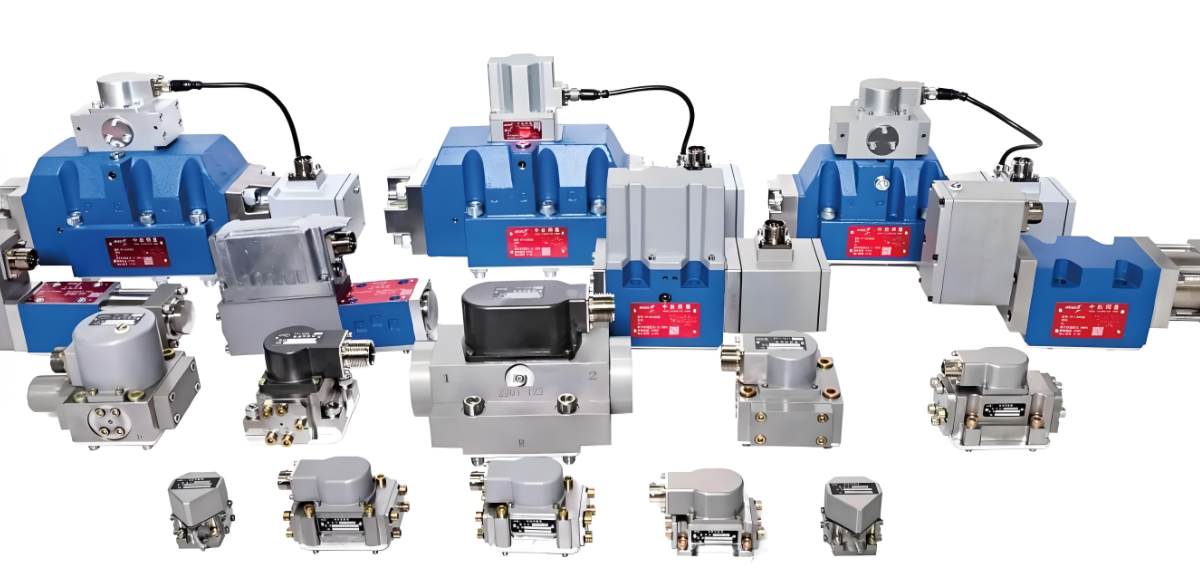
In precision laboratory equipment, as a core control component, the servo valve plays a crucial role in the accuracy and reliability of the experiment. The servo valve is a device that converts electrical signals into fluid pressure signals, whose function is to precisely control the pressure or flow of fluids (such as hydraulic or pneumatic) to achieve precise control of the actuator. It is widely used in various precision instruments and equipment in fields such as biomedicine, aerospace, electronics, and mechanical manufacturing.
The working principle of the servo valve is based on electromagnetic force and fluid dynamics. When the servo valve receives an electrical signal, it generates electromagnetic force through an electromagnet, which pushes the valve core to move, thereby changing the flow path of the fluid and controlling the pressure or flow of the fluid. This control method can achieve fine adjustment of fluid flow, ensuring the stability and accuracy of the experimental process.
In precision laboratory equipment, servo valves usually work in coordination with sensors and controllers to form a closed-loop control system. Sensors are used to monitor the pressure or flow of fluids in real time, and the controller, based on the set control objectives and feedback signals, sends corresponding electrical signals to the servo valve to adjust the fluid flow and ensure that the experimental process reaches the expected goal.
To meet the requirements of precision laboratory equipment for high precision and stability, the design and manufacturing of servo valves need to consider many key factors. Firstly, the structural design of the servo valve must ensure that it can withstand high pressure and high flow conditions while maintaining good sealing performance. Secondly, the manufacturing and assembly accuracy of the servo valve directly affect its control performance, so the servo valves used in precision laboratory equipment usually adopt high-precision processing technology and strict quality control processes. In addition, the electronic control part of the servo valve also needs to have high reliability to ensure stable operation under various environmental conditions.
With the development of science and technology, servo valve technology is also continuously improving. For example, digital servo valves can provide higher control accuracy and faster response speed, suitable for precision experimental equipment that requires rapid response. In addition, intelligent servo valves also have self-diagnosis and fault detection functions, which can monitor the equipment status in real time, promptly identify and resolve potential problems, and ensure the smooth progress of the experiment.
In general, as a key control component in precision laboratory equipment, the servo valve is crucial for achieving high precision and stability in the experimental process. With the advancement of technology, the application scope of servo valves will be more extensive, providing more reliable support for scientific research and industrial production.