
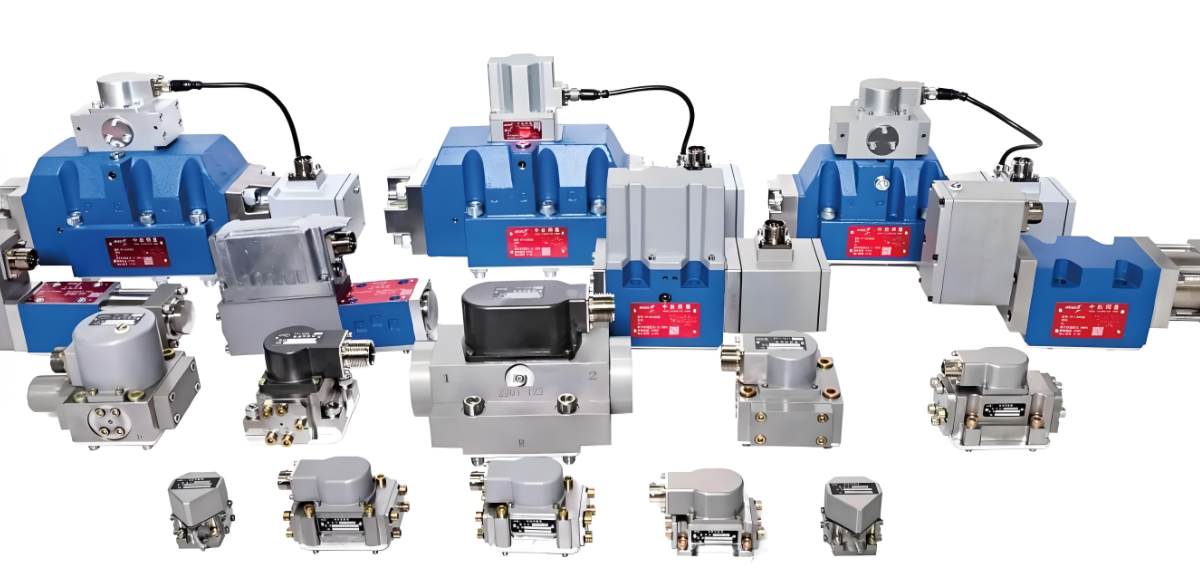
In the era of rapid advancement of global maritime transportation and marine engineering, the modern ship industry is undergoing a profound transformation centered on automation, intelligence, and greenization. As the "core nerve" of ship navigation, the steering system directly determines the ship's maneuverability, navigation safety, and operational efficiency—especially in complex marine environments such as rough seas, narrow waterways, and busy ports, the stability and responsiveness of the steering system are crucial to avoiding maritime accidents. Among the core components of the ship's hydraulic automation system, the servo valve for hydraulic actuators acts as a key "bridge" between electrical control signals and hydraulic mechanical actions, realizing precise control of the steering mechanism. ATOS, as a globally renowned supplier specializing in hydraulic systems, electronic control systems, and integrated automation solutions, has long been deeply involved in the marine field. Its hydraulic actuator servo valve technology, with superior performance tailored to marine working conditions, has become a core supporting force for optimizing ship steering systems. This article will deeply dissect the technical principles, core characteristics, and practical application mechanisms of ATOS hydraulic actuator servo valves, and further explore their value in promoting the intelligent upgrading of ship steering systems and the development trend in the context of the modern marine industry transformation.
In-depth Interpretation of ATOS Hydraulic Actuator Servo Valve Technology
The ATOS hydraulic actuator servo valve is a high-precision electro-hydraulic conversion and control component specially developed for the harsh and complex marine operating environment. Its core function is to accurately convert the electrical control signals (from the ship's navigation control system or autopilot) into adjustable hydraulic flow and pressure signals, thereby driving the hydraulic actuator (rudder machine) to complete precise mechanical actions, and ultimately realizing the accurate control of the ship's rudder angle. Unlike ordinary industrial servo valves, ATOS hydraulic actuator servo valves have undergone special structural design and material selection to adapt to the unique working conditions of ships, such as high salt spray corrosion, strong vibration, large temperature fluctuations (from -20℃ to 60℃), and electromagnetic interference from marine electrical equipment.
From the perspective of technical principles, the ATOS hydraulic actuator servo valve adopts a closed-loop control mode integrating "detection-feedback-regulation". It is mainly composed of three core modules: the electrical signal processing module, the electro-hydraulic conversion module, and the precision control module. The electrical signal processing module first amplifies and filters the weak control signals from the ship's central control system to eliminate interference signals; the electro-hydraulic conversion module converts the processed electrical signals into mechanical displacement of the spool through a torque motor or voice coil motor; the precision control module adjusts the opening of the valve port according to the spool displacement, thereby precisely controlling the flow and pressure of the hydraulic oil entering the actuator. At the same time, the built-in high-sensitivity position sensor of the servo valve continuously collects the spool displacement signal and feeds it back to the electrical signal processing module, forming a closed-loop control loop. This design ensures that the servo valve can quickly correct deviations even under external interference, maintaining the stability and accuracy of the control process.
Core Technical Features of ATOS Hydraulic Actuator Servo Valves
1. Micron-level High-precision Control, Adapting to Complex Steering Demands
ATOS hydraulic actuator servo valves integrate high-precision microprocessors and contactless displacement sensors, enabling the control accuracy of the rudder angle to reach the micron level (the rudder angle adjustment error is less than ±0.1°). This level of precision is crucial for ships in different navigation scenarios: when navigating in narrow waterways or approaching/departing ports, the ship needs to make small and precise rudder adjustments to avoid collisions with other ships or shore structures; when sailing in rough seas, the servo valve can quickly compensate for the rudder angle deviation caused by wave impacts, ensuring the ship's course stability. Compared with traditional hydraulic control valves, the high precision of ATOS servo valves reduces the cumulative error of the steering system, significantly improving the ship's maneuverability and navigation safety.
2. Multi-dimensional Anti-interference Design, Ensuring Stable Operation in Harsh Environments
Aiming at the complex interference factors in the marine environment, ATOS has adopted a multi-layer anti-interference design for its hydraulic actuator servo valves. In terms of electromagnetic interference resistance, the servo valve's electrical connector adopts a fully shielded structure, and the internal circuit is designed with anti-electromagnetic radiation (EMI) technology, which can effectively resist the electromagnetic interference generated by marine radar, communication equipment, and power systems, avoiding signal distortion and control failure. In terms of environmental corrosion resistance, the valve body is made of high-strength corrosion-resistant alloy materials, and the sealing structure adopts marine-grade fluorine rubber seals, which can resist the corrosion of salt spray, humidity, and chemical media, ensuring long-term stable operation in the marine environment. In addition, the internal spool and valve seat adopt a wear-resistant coating and a shock-absorbing structure, which can withstand the strong vibration generated by the ship's engine and waves, reducing the failure rate caused by mechanical wear.
3. Modular Design, Lowering Maintenance Costs and Improving Compatibility
ATOS hydraulic actuator servo valves adopt a standardized modular design, where key components such as the electrical signal processing unit, electro-hydraulic conversion unit, and filter unit can be independently disassembled and replaced. This design brings two core advantages to ship operation and maintenance: on the one hand, when a fault occurs, maintenance personnel can quickly locate the faulty module and replace it without disassembling the entire servo valve, shortening the maintenance time (the average maintenance time is reduced by 40% compared with non-modular products) and reducing the ship's downtime loss; on the other hand, the modular design supports flexible configuration of different functional modules according to the steering system requirements of different types of ships (such as ocean-going cargo ships, LNG carriers, offshore engineering ships), with strong compatibility. At the same time, ATOS provides standardized interface protocols, enabling the servo valve to be seamlessly connected with the steering control systems of mainstream shipyards, reducing the difficulty of system integration.
4. Efficient Energy-saving Performance, Conforming to Green Marine Trends
Against the backdrop of global emphasis on energy conservation and emission reduction in the marine industry (such as the International Maritime Organization's IMO 2025 energy efficiency regulations), the energy-saving performance of ATOS hydraulic actuator servo valves has become a prominent advantage. The servo valve adopts an adaptive flow control algorithm, which can adjust the output hydraulic flow in real time according to the actual steering demand of the ship—when the ship sails in a straight line and does not need to adjust the rudder, the servo valve reduces the hydraulic oil output to the minimum, avoiding the energy waste caused by the continuous high-pressure output of traditional hydraulic valves. In practical applications, the application of ATOS servo valves can reduce the energy consumption of the ship's hydraulic steering system by 12% to 18%, thereby reducing the ship's fuel consumption and carbon emissions. In addition, the optimized internal flow channel design of the servo valve reduces the pressure loss of hydraulic oil, improving the energy utilization efficiency of the entire hydraulic system.
Practical Application of ATOS Hydraulic Actuator Servo Valves in Ship Steering Systems (Scenario-based Expansion)
The ship steering system is a complex integrated system consisting of a control unit, a servo drive unit (servo valve + hydraulic actuator), a rudder mechanism, and a feedback unit. ATOS hydraulic actuator servo valves are located in the core link of the servo drive unit, and their application runs through the entire process of ship steering control. Combined with practical navigation scenarios, their specific applications are mainly reflected in the following aspects:
1. Precise Control of Rudder Angle in Multi-scenario Navigation
In the process of ship navigation, the steering system needs to complete different rudder control tasks according to the navigation status, and ATOS servo valves provide precise driving force for this. When the ship is sailing at high speed on the open sea, the servo valve responds to the autopilot signal to maintain a stable rudder angle, ensuring that the ship sails along the set course; when the ship needs to turn (such as changing lanes or avoiding obstacles), the servo valve quickly adjusts the hydraulic flow according to the steering wheel signal from the bridge, driving the rudder machine to complete the rudder angle change within milliseconds, ensuring the flexibility of the turn; when the ship is berthing or unberthing at low speed, the servo valve realizes micro-rudder adjustment, enabling the ship to move slowly and accurately, avoiding collisions with the wharf or other ships. Especially in harsh sea conditions (such as strong winds, big waves, and currents), the high response speed and stability of ATOS servo valves can effectively offset the impact of external factors on the rudder mechanism, ensuring that the ship's course is not easily deviated.
2. Integration with Ship Intelligent Automation System
With the development of intelligent ships, modern ship steering systems are no longer independent components but are deeply integrated with the ship's overall automation system (such as the Ship Integrated Automation System, SIAS; the Voyage Data Recorder, VDR; and the Intelligent Navigation System). ATOS hydraulic actuator servo valves, with their excellent data interaction capabilities, can seamlessly connect with these intelligent systems. On the one hand, they receive control commands from the central control system in real time to realize automatic rudder control, reducing the workload of the crew and avoiding human operation errors; on the other hand, they collect real-time operating data (such as valve port opening, hydraulic pressure, operating temperature, and fault codes) and transmit it to the ship's central control platform. The crew can monitor the operating status of the steering system through the platform, and the system can also automatically analyze the data to predict potential faults (such as abnormal wear of the spool, leakage of hydraulic oil), improving the reliability of the steering system.
3. Remote Monitoring and Predictive Maintenance
ATOS hydraulic actuator servo valves are equipped with a dedicated remote monitoring module, which can transmit operating data to the shore-based monitoring center through the ship's satellite communication system. This enables shore-based technical personnel to remotely monitor the operating status of the servo valve in real time, without the need for on-board inspection. When the system detects abnormal data (such as a sudden increase in operating temperature or a decrease in control precision), the shore-based center can promptly issue an early warning and provide maintenance suggestions to the crew. For example, if the servo valve's filter is clogged, the system can remind the crew to replace the filter element in advance, avoiding further damage to the valve core and actuator. This remote monitoring and predictive maintenance mode not only reduces the difficulty of ship maintenance but also extends the service life of the servo valve and the entire steering system. In addition, ATOS's global after-sales service network can provide technical support for ships in different sea areas, ensuring that maintenance work can be carried out in a timely manner.
4. Application Cases in Special Ship Types
ATOS hydraulic actuator servo valves have been widely applied in various special ship types due to their superior performance. For example, in LNG carriers (liquefied natural gas carriers), which have extremely high requirements for navigation safety and stability, ATOS servo valves are used in the steering system to ensure precise control of the rudder angle during the transportation of low-temperature LNG, avoiding accidents caused by course deviation; in offshore engineering ships (such as offshore platforms and wind power installation ships), which operate in complex offshore environments, the anti-interference and corrosion-resistant performance of ATOS servo valves ensures the stable operation of the steering system, enabling the ships to complete precision operations such as platform mooring and wind power equipment installation; in large container ships, which have large tonnage and high navigation speed, the high efficiency and energy-saving performance of ATOS servo valves helps reduce the ship's fuel consumption, improving the economic benefits of shipping companies.
Industrial Value and Development Trend of ATOS Hydraulic Actuator Servo Valves
1. Enhancing the Core Competitiveness of Shipping Enterprises
The application of ATOS hydraulic actuator servo valves brings multi-dimensional value to shipping enterprises. In terms of safety, the high precision and stability of the servo valve reduce the failure rate of the steering system, lowering the risk of maritime accidents and reducing the economic loss caused by accidents; in terms of efficiency, the automatic control and rapid response capabilities of the servo valve improve the ship's maneuverability and navigation efficiency, shortening the voyage time and improving the transportation capacity; in terms of cost, the energy-saving performance of the servo valve reduces fuel consumption, and the modular design lowers maintenance costs, comprehensively improving the economic benefits of shipping enterprises. In the context of increasingly fierce competition in the maritime transportation industry, these advantages help shipping enterprises establish core competitiveness.
2. Adapting to the Development Trend of Intelligent and Green Ships
With the deepening of the global marine industry's transformation towards intelligence and greenization, the demand for high-performance servo control components is becoming increasingly urgent. ATOS hydraulic actuator servo valves are highly compatible with this development trend. In terms of intelligence, the servo valve's data interaction capabilities can be seamlessly connected with emerging technologies such as digital twin and artificial intelligence in the marine field. For example, by integrating with the digital twin system of the ship's steering system, the servo valve can simulate the operating status in real time, optimizing the control strategy and realizing the full-life cycle management of the steering system; in terms of greenization, the energy-saving performance of the servo valve helps ships meet the increasingly strict energy efficiency and emission reduction regulations, promoting the green development of the marine industry. In addition, with the development of electric ships and hybrid ships, ATOS is also continuously optimizing the servo valve technology to adapt to the new requirements of the hydraulic-electric hybrid steering system, expanding its application scope in new energy ships.