
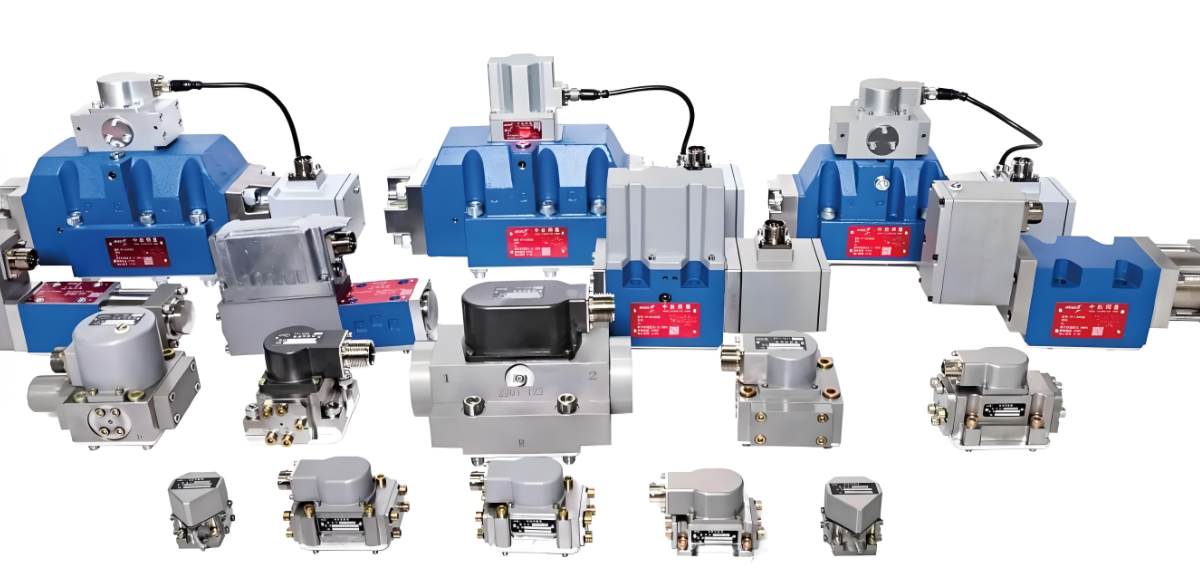
Servo systems and proportional valves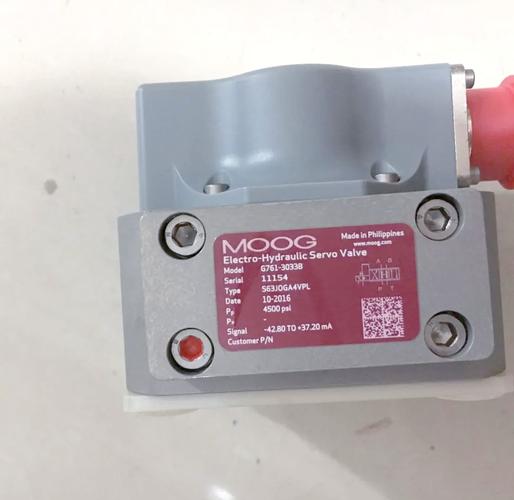 are indispensable key components in the field of modern industrial automation. They together constitute the core of industrial automation equipment. This article will deeply analyze the working principle of servo systems and proportional valves to help readers better understand their application in industrial automation.
A servo system is an automated device that can accurately control the position, speed, and acceleration of motion. It is mainly composed of servo motors, servo drivers, and feedback elements. The working principle of the servo system is based on closed-loop control theory, with the feedback loop as its core. The role of the feedback loop is to compare the output signal of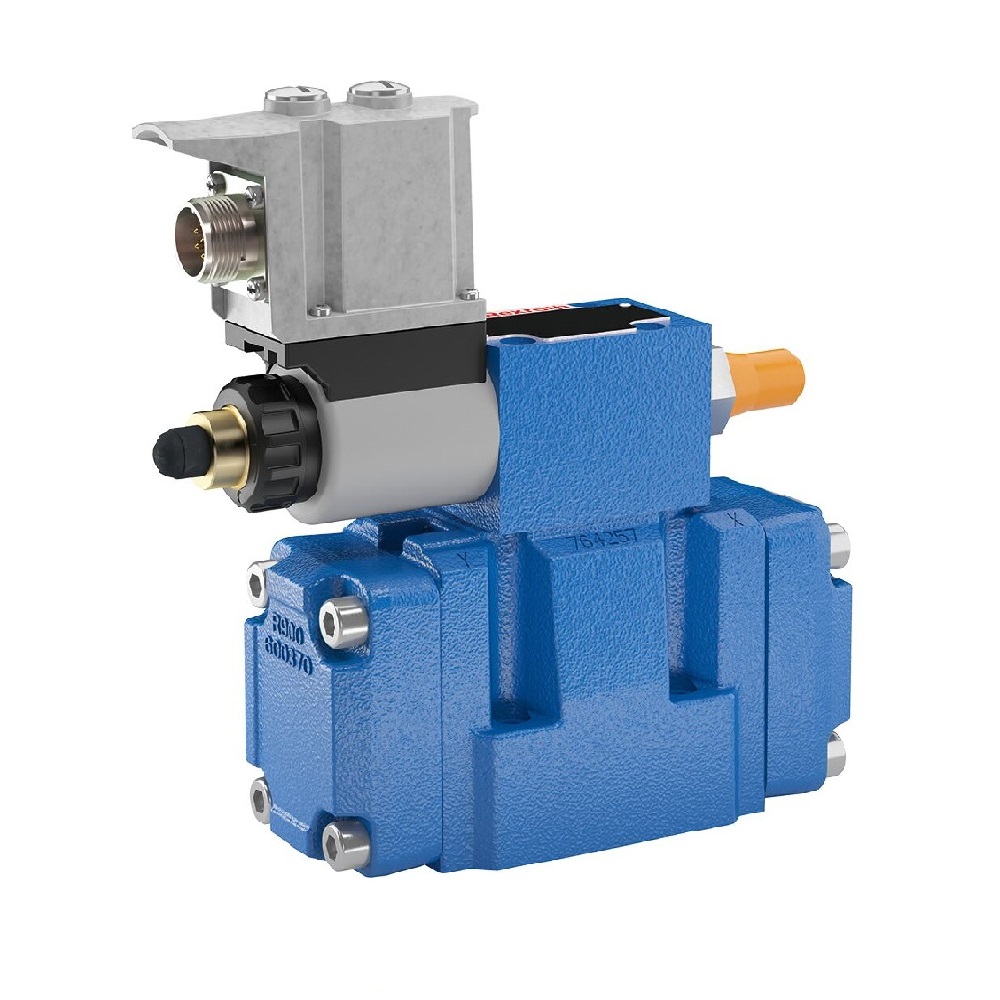
The servo motor with the target position signal, generate a deviation signal, and the driver adjusts the operating state of the motor according to the deviation signal to keep the motor output consistent with the target position. The feedback element is usually a position sensor, which detects the actual position of the servo motor in real time and feeds back the position information to the driver, so that the driver can adjust the operating state of the servo motor accordingly to achieve precise control.
A proportional valve is a valve that controls the flow rate of fluid by changing the size of the valve core opening. Its working principle is based on the basic principles of fluid mechanics and hydraulic systems. The core component of the proportional valve is the valve core, which controls the size of the fluid passage and thus changes the flow rate of the fluid. Proportional valves are usually used in conjunction with servo systems to control the flow rate of fluid by changing the position of the valve core, thereby controlling the movement of the actuator. The control signal of the proportional valve is an electrical signal sent by the servo driver, which is amplified and converted to drive the movement of the valve core, thereby controlling the flow rate of the fluid. The control accuracy and response speed of the proportional valve directly affect the control accuracy and response speed of the servo system.
Servo systems and proportional valves together constitute the core of industrial automation equipment. Their collaborative work enables equipment to achieve precise control, improve production efficiency, and reduce production costs. The application fields of servo systems and proportional valves are extensive, including but not limited to CNC machine tools, robots, automated production lines, automotive manufacturing, aerospace, and other fields.
Understanding the working principle of servo systems and proportional valves is crucial for engineers and maintenance personnel. It not only helps us better understand and maintain these key equipment but also provides ideas for optimizing equipment performance and improving production efficiency. In the future, with the development of technology, the technology of servo systems and proportional valves will become more mature and more excellent, which will bring greater progress and transformation to industrial automation.
In terms of technological evolution, the integration of servo systems and proportional valves with intelligent technologies has become a prominent trend. The introduction of artificial intelligence (AI) and machine learning algorithms enables servo systems to have adaptive adjustment capabilities. For example, in complex working environments with variable loads, the system can automatically learn and optimize control parameters based on historical operating data, thereby avoiding the degradation of control accuracy caused by manual parameter setting errors. Similarly, intelligent proportional valves equipped with sensors for pressure, temperature, and flow rate can realize real-time monitoring of fluid state, and through data interaction with the servo system, achieve dynamic compensation for fluid viscosity changes and pressure fluctuations, further improving the stability of the entire control system.
The miniaturization and high-power density design are also important directions for the development of servo motors and proportional valves. With the increasing demand for compact and lightweight equipment in fields such as electronic manufacturing and medical devices, servo motor manufacturers are continuously optimizing the motor structure, adopting high-performance permanent magnet materials and precision winding technology to reduce the volume and weight of the motor while ensuring output power. For proportional valves, the application of micro-electro-mechanical systems (MEMS) technology has promoted the development of micro-proportional valves, which can achieve precise control of tiny fluid flows and are widely used in precision injection molding, microfluidic chips, and other fields requiring ultra-high control accuracy.
From the perspective of energy conservation and environmental protection, the energy efficiency optimization of servo systems and proportional valves has attracted more and more attention. Traditional servo systems and proportional valves have certain energy losses during operation, such as heat loss of motors and throttling loss of valves. To solve this problem, manufacturers have developed energy-saving servo drivers with regenerative braking functions, which can convert the kinetic energy generated by the motor during deceleration or braking into electrical energy and feed it back to the power grid, thereby reducing energy consumption. For proportional valves, the adoption of electro-hydraulic proportional control technology with load-sensing function can adjust the output flow and pressure of the valve according to the actual load demand, avoiding the energy waste caused by constant high-pressure and high-flow output, which is of great significance for reducing the energy consumption of industrial equipment and achieving green production.
In practical application scenarios, the collaborative control effect of servo systems and proportional valves directly determines the performance of the equipment. Taking CNC machine tools as an example, during the cutting process, the servo system drives the linear axis and rotary axis to move precisely according to the machining program, while the proportional valve controls the flow rate of the hydraulic oil in the spindle drive system, ensuring the stability and cutting force of the spindle rotation. The high-precision collaboration between the two enables the machine tool to process complex workpieces with high precision and high efficiency, reducing the machining error and improving the product qualification rate. In the field of robotics, especially in industrial robots with multiple degrees of freedom, each joint is equipped with a servo motor, and the proportional valve controls the hydraulic or pneumatic actuator of the joint. The coordinated work of the two ensures the flexibility and accuracy of the robot's movement, making it possible for the robot to complete complex operations such as assembly, welding, and spraying.
The maintenance and maintenance of servo systems and proportional valves are also key links to ensure the stable operation of equipment. For servo systems, regular inspection of the connection status of the motor and driver, cleaning of the heat dissipation system, and calibration of the position sensor are required. If abnormal phenomena such as motor overheating, excessive noise, or inaccurate positioning are found, timely troubleshooting and maintenance should be carried out to avoid further damage to the equipment. For proportional valves, attention should be paid to the cleanliness of the fluid to prevent impurities from blocking the valve core and affecting the control performance. Regular replacement of the filter element and inspection of the sealing performance of the valve are also necessary. In addition, the use of professional diagnostic equipment can realize real-time monitoring of the operating parameters of servo systems and proportional valves, predict potential faults in advance, and carry out preventive maintenance, which can effectively reduce the downtime of equipment and improve the reliability of the production line.
With the continuous development of industrial 4.0, the integration of servo systems and proportional valves into the industrial Internet of Things (IIoT) has become an inevitable trend. Through the installation of IoT sensors on servo motors, drivers, and proportional valves, the operating data of the equipment can be collected in real time and uploaded to the cloud platform. The cloud platform analyzes and processes the data through big data technology, providing decision support for equipment operation and maintenance, production scheduling, and process optimization. For example, through the analysis of the operating data of the servo system, the production efficiency can be optimized by adjusting the production rhythm; through the monitoring of the proportional valve's flow and pressure data, the quality of the product can be controlled by adjusting the process parameters. This integrated intelligent management mode not only improves the level of industrial automation but also promotes the transformation and upgrading of the manufacturing industry towards intelligence and digitization.
In the field of aerospace, the requirements for servo systems and proportional valves are more stringent. Due to the harsh working environment such as high altitude, low temperature, and high pressure, servo systems and proportional valves used in aerospace equipment must have high reliability, high stability, and strong environmental adaptability. For example, in the flight control system of an aircraft, the servo system controls the movement of the ailerons, elevators, and rudders, while the proportional valve controls the flow rate of the hydraulic oil in the control system. The high-precision and high-reliability collaboration between the two directly affects the flight safety and stability of the aircraft. Therefore, the research and development of servo systems and proportional valves for aerospace applications require the use of advanced materials and manufacturing processes, and strict testing and verification to ensure that they can work stably in extreme environments.
In conclusion, servo systems and proportional valves, as the core components of industrial automation, play an irreplaceable role in promoting the development of the manufacturing industry. With the continuous innovation of technology, their performance will be further improved, and their application fields will be further expanded. For engineers and technical personnel in the field of industrial automation, it is necessary to keep abreast of the latest technological developments of servo systems and proportional valves, master their working principles and application skills, and continuously explore new application modes and optimization methods, so as to make greater contributions to the development of industrial automation and the transformation and upgrading of the manufacturing industry.