
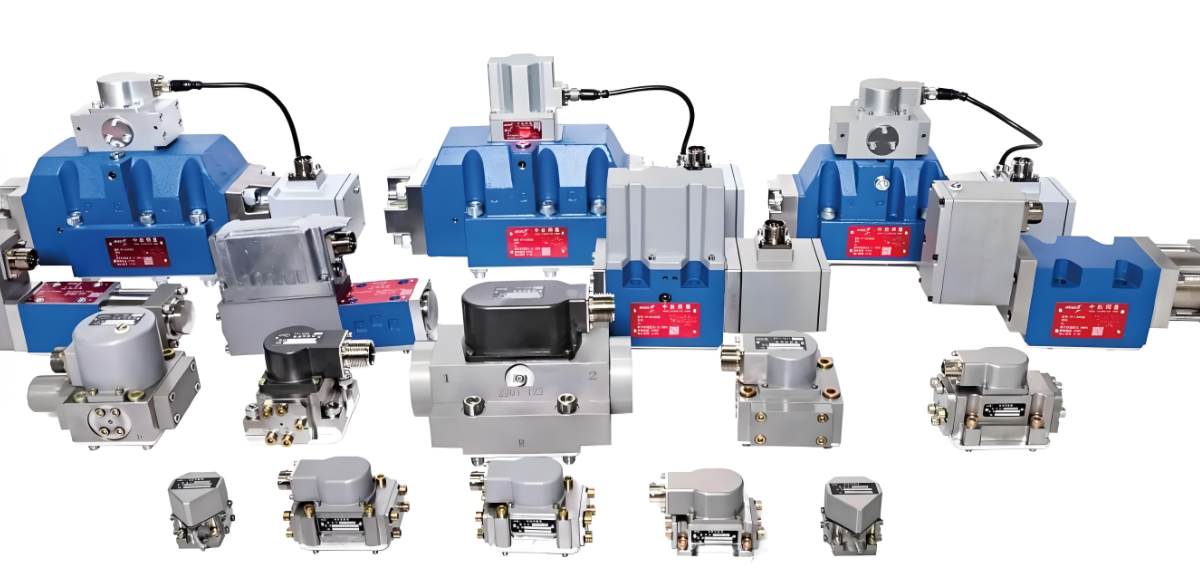
1. Basic Principles of Servo Valve
2. Technological Innovation and Development Trends
2.1 Application of New Materials
2.2 Optimization of Structural Design
2.3 Adoption of Advanced Manufacturing Processes
2.4 Integration of Intelligent Control Technology
2.5 Development of Energy-Saving and Environmental Protection Technologies
3. Application Fields
3.1 Aerospace Field
3.2 Automotive Manufacturing Field
3.3 Construction Machinery Field
3.4 Machine Tool Processing Field
3.5 Other Application Fields
4. Conclusion
<span data-lark-record-data="{"isCut":false,"rootId":"MM5Lfkt1Kdh7KecYyNyc4Q6Knzc","parentId":null,"blockIds":[1,2,3,4,5,6,7,8,9,10,11,12,13,14,15,16,17,18,19,20,21,22,23,24,25,26,27,28,29,30,31,32,33],"recordIds":["MM5Lfkt1Kdh7KecYyNyc4Q6Knzc","P3I7fZTTLduqLdc81WMcGtG5nbh","GVxXfWnDBdba6ncyUzLcFJzQnNc","AVdQfGz96dZBU1cjhwJcpmq9nHc","VPYyfyMODd4JuZcGfJvcQiZmnKV","EfwTfpJvKd8fkUcs71fcukUDn3e","U7yDfpDFCdyD3EcyxMLcnieenWb","RGzsfBeB6d0DgEcTs7wcijBxnhh","QyNBfLe55dRRX7cWAHucPx42nFd","Akbzfpfg8dIauwc6p0fcCxJynBh","OvfMfFsEXdXiozcNjLEcFk8Lnvc","AK0UfMp2cdqXgncKYLccfmU4nSb","GBFEfyhLCdtPcjc6jEbctlicnGd","CkVffqwkNdcA2wcNknncAOJSn3p","Ysm9fltsudIUzxckdDjca0Uwn1d","BmGTfrynhdBLKBcwDlIcxJvxnPc","IIOzf8ynSdggiAcGtdhcn63rnwe","L3gWfvHq0dj49LcAFjpcaQLznbg","PudifoBbhdKDhscTIohcD9MEnsf","BzPgfkPYRdPQ2Rcuphdc3SQbnUd","MuzbfD8cYdetXNcdY37cQEtCnbb","W4jSf2IWwdi0cvcQioBcGQMEnab","P2fIfbTvsdJS60cV40ZcDccpnZf","G5MufR57ad65OPcLglfcG86Unze","EpvxfHrwNdlJlwcoaNucftX9n6d","SyY0flxftdcofYcJhxMclLlPnDf","SXxyfTzWzdJ8ECc4RKxc2eYunoc","UaDRfGRYVdUtPpc8meccAM1znbb","SiI7fpQUQdJbg4clv3Ic26bJntg","IKFZflP7pdVeJkc6sZKcjjkZnZe","DFu6fH3fodrRE6c4XX9cR9jTnqb","JEa9fyHpBdtCvZcA0z5cFMFgnBh","E2kUfCtmcdGb7wc3Ax7c4ChHn4f"],"recordMap":{"MM5Lfkt1Kdh7KecYyNyc4Q6Knzc":{"id":"MM5Lfkt1Kdh7KecYyNyc4Q6Knzc","snapshot":{"align":"","author":"3863002183900732","children":[],"comments":[],"hidden":false,"locked":false,"parent_id":"","revisions":[],"status":{"streaming":{"enabled":false,"expired_at":"1766922068","source":1,"operator_id":"3863002183900732","is_create_command":true}},"text":{"apool":{"nextNum":2,"numToAttrib":{"0":["author","3863002183900732"],"1":["ai-extra","{\"is_ai_gen\":true}"]}},"initialAttributedTexts":{"attribs":{"0":"*0*1+28*0*1+9"},"text":{"0":"Selected Techniques of Servo Valve in Hydraulic Systems of Continental Hydraulic Industry"}}},"type":"page"}},"P3I7fZTTLduqLdc81WMcGtG5nbh":{"id":"P3I7fZTTLduqLdc81WMcGtG5nbh","snapshot":{"align":"","author":"3863002183900732","children":[],"comments":[],"hidden":false,"locked":false,"parent_id":"MM5Lfkt1Kdh7KecYyNyc4Q6Knzc","revisions":[],"text":{"initialAttributedTexts":{"text":{"0":"1. Basic Principles of Servo Valve"},"attribs":{"0":"*0+y"}},"apool":{"numToAttrib":{"0":["author","3863002183900732"]},"nextNum":1}},"type":"heading1"}},"GVxXfWnDBdba6ncyUzLcFJzQnNc":{"id":"GVxXfWnDBdba6ncyUzLcFJzQnNc","snapshot":{"align":"","author":"3863002183900732","children":[],"comments":[],"hidden":false,"locked":false,"parent_id":"MM5Lfkt1Kdh7KecYyNyc4Q6Knzc","revisions":[],"text":{"initialAttributedTexts":{"text":{"0":"A servo valve is a core control component in hydraulic systems that precisely converts electrical signals into fluid pressure and flow signals, realizing the accurate regulation of the movement of executive components (such as hydraulic cylinders and hydraulic motors). Its composition is not only limited to the valve core, valve body, and feedback system, but also includes key parts such as the torque motor (or force motor), nozzle baffle mechanism (for two-stage servo valves), and preamplifier. These components work together to ensure the high precision and high responsiveness of the servo valve."},"attribs":{"0":"*0+gs"}},"apool":{"numToAttrib":{"0":["author","3863002183900732"]},"nextNum":1}},"type":"text"}},"AVdQfGz96dZBU1cjhwJcpmq9nHc":{"id":"AVdQfGz96dZBU1cjhwJcpmq9nHc","snapshot":{"type":"text","parent_id":"MM5Lfkt1Kdh7KecYyNyc4Q6Knzc","comments":[],"revisions":[],"locked":false,"hidden":false,"author":"3863002183900732","children":[],"text":{"initialAttributedTexts":{"text":{"0":"The valve core, as the core moving part of the servo valve, is usually designed with a spool structure (such as a sliding spool) or a rotary structure (such as a rotary valve core). Its movement stroke is generally in the micron to millimeter level, and the precise control of the flow path and opening degree can be achieved by changing its relative position with the valve body. For example, when the servo valve receives an electrical signal, the preamplifier first amplifies the weak electrical signal, and then drives the torque motor to generate a corresponding torque, which pushes the nozzle baffle mechanism to produce a small displacement. This displacement changes the pressure difference on both sides of the valve core, driving the valve core to move, thereby changing the flow area between the valve core and the valve body, and finally regulating the fluid pressure and flow output to the executive component."},"attribs":{"0":"*0+po"}},"apool":{"numToAttrib":{"0":["author","3863002183900732"]},"nextNum":1}},"align":""}},"VPYyfyMODd4JuZcGfJvcQiZmnKV":{"id":"VPYyfyMODd4JuZcGfJvcQiZmnKV","snapshot":{"type":"text","parent_id":"MM5Lfkt1Kdh7KecYyNyc4Q6Knzc","comments":[],"revisions":[],"locked":false,"hidden":false,"author":"3863002183900732","children":[],"text":{"initialAttributedTexts":{"text":{"0":"The working principle of the servo valve is based on the organic combination of fluid dynamics, mechanical control theory, and electromagnetism. From the perspective of fluid dynamics, the flow through the servo valve follows the Bernoulli equation, and the relationship between the flow rate and the pressure difference, the opening degree of the valve port, and the fluid viscosity is the key to determining the control performance. From the perspective of control theory, the servo valve is a typical feedback control system. The feedback system (usually a mechanical feedback rod or an electrical feedback sensor) can real-time detect the actual position of the valve core and compare it with the input electrical signal. If there is a deviation, the system will automatically adjust the drive signal of the torque motor to correct the position of the valve core, ensuring that the output fluid signal accurately matches the input electrical signal. This closed-loop feedback mechanism is the fundamental guarantee for the servo valve to achieve precise control."},"attribs":{"0":"*0+tm"}},"apool":{"numToAttrib":{"0":["author","3863002183900732"]},"nextNum":1}},"align":""}},"EfwTfpJvKd8fkUcs71fcukUDn3e":{"id":"EfwTfpJvKd8fkUcs71fcukUDn3e","snapshot":{"type":"text","parent_id":"MM5Lfkt1Kdh7KecYyNyc4Q6Knzc","comments":[],"revisions":[],"locked":false,"hidden":false,"author":"3863002183900732","children":[],"text":{"initialAttributedTexts":{"text":{"0":"According to the number of stages of amplification, servo valves can be divided into single-stage, two-stage, and three-stage servo valves. Single-stage servo valves have a simple structure but low control precision and anti-interference ability; two-stage servo valves (composed of a preamplifier stage and a power stage) are currently the most widely used type, which balance the advantages of high precision and strong load capacity; three-stage servo valves are mainly used in occasions with extremely high requirements for response speed and control precision, such as aerospace fields."},"attribs":{"0":"*0+gf"}},"apool":{"numToAttrib":{"0":["author","3863002183900732"]},"nextNum":1}},"align":""}},"U7yDfpDFCdyD3EcyxMLcnieenWb":{"id":"U7yDfpDFCdyD3EcyxMLcnieenWb","snapshot":{"type":"heading1","parent_id":"MM5Lfkt1Kdh7KecYyNyc4Q6Knzc","comments":[],"revisions":[],"locked":false,"hidden":false,"author":"3863002183900732","children":[],"text":{"initialAttributedTexts":{"text":{"0":"2. Technological Innovation and Development Trends"},"attribs":{"0":"*0+1e"}},"apool":{"numToAttrib":{"0":["author","3863002183900732"]},"nextNum":1}},"align":""}},"RGzsfBeB6d0DgEcTs7wcijBxnhh":{"id":"RGzsfBeB6d0DgEcTs7wcijBxnhh","snapshot":{"type":"text","parent_id":"MM5Lfkt1Kdh7KecYyNyc4Q6Knzc","comments":[],"revisions":[],"locked":false,"hidden":false,"author":"3863002183900732","children":[],"text":{"initialAttributedTexts":{"text":{"0":"With the rapid development of science and technology, especially the in-depth promotion of concepts such as intelligent manufacturing, Industry 4.0, and green manufacturing, the hydraulic industry has put forward more stringent requirements for servo valves. Traditional servo valve technology can no longer fully meet the needs of high-end equipment in terms of response speed, control precision, reliability, service life, and energy efficiency. Therefore, technological innovation has become the core driving force for the development of servo valve technology, and has shown a series of clear development trends."},"attribs":{"0":"*0+h4"}},"apool":{"numToAttrib":{"0":["author","3863002183900732"]},"nextNum":1}},"align":""}},"QyNBfLe55dRRX7cWAHucPx42nFd":{"id":"QyNBfLe55dRRX7cWAHucPx42nFd","snapshot":{"type":"heading2","parent_id":"MM5Lfkt1Kdh7KecYyNyc4Q6Knzc","comments":[],"revisions":[],"locked":false,"hidden":false,"author":"3863002183900732","children":[],"text":{"initialAttributedTexts":{"text":{"0":"2.1 Application of New Materials"},"attribs":{"0":"*0+w"}},"apool":{"numToAttrib":{"0":["author","3863002183900732"]},"nextNum":1}},"align":""}},"Akbzfpfg8dIauwc6p0fcCxJynBh":{"id":"Akbzfpfg8dIauwc6p0fcCxJynBh","snapshot":{"type":"text","parent_id":"MM5Lfkt1Kdh7KecYyNyc4Q6Knzc","comments":[],"revisions":[],"locked":false,"hidden":false,"author":"3863002183900732","children":[],"text":{"initialAttributedTexts":{"text":{"0":"The development and application of new materials are important ways to improve the performance of servo valves. On the one hand, the use of high-strength, wear-resistant, and corrosion-resistant materials (such as engineering ceramics, titanium alloys, and composite materials) for the valve core and valve body can significantly reduce the wear of the valve port during long-term operation, improve the corrosion resistance of the servo valve in harsh working environments (such as high temperature, high pressure, and corrosive media), and thus extend the service life. For example, engineering ceramics have the advantages of high hardness, low friction coefficient, and good wear resistance, which can reduce the friction between the valve core and the valve body, improve the movement flexibility of the valve core. On the other hand, the use of new magnetic materials (such as rare earth permanent magnet materials) for the torque motor can enhance the magnetic field strength of the motor, improve the output torque and response speed of the motor, and reduce the power consumption of the motor."},"attribs":{"0":"*0+um"}},"apool":{"numToAttrib":{"0":["author","3863002183900732"]},"nextNum":1}},"align":""}},"OvfMfFsEXdXiozcNjLEcFk8Lnvc":{"id":"OvfMfFsEXdXiozcNjLEcFk8Lnvc","snapshot":{"type":"heading2","parent_id":"MM5Lfkt1Kdh7KecYyNyc4Q6Knzc","comments":[],"revisions":[],"locked":false,"hidden":false,"author":"3863002183900732","children":[],"text":{"initialAttributedTexts":{"text":{"0":"2.2 Optimization of Structural Design"},"attribs":{"0":"*0+11"}},"apool":{"numToAttrib":{"0":["author","3863002183900732"]},"nextNum":1}},"align":""}},"AK0UfMp2cdqXgncKYLccfmU4nSb":{"id":"AK0UfMp2cdqXgncKYLccfmU4nSb","snapshot":{"type":"text","parent_id":"MM5Lfkt1Kdh7KecYyNyc4Q6Knzc","comments":[],"revisions":[],"locked":false,"hidden":false,"author":"3863002183900732","children":[],"text":{"initialAttributedTexts":{"text":{"0":"The optimization of the structural design of servo valves is focused on improving control precision, reducing response lag, and enhancing reliability. With the help of computer-aided design (CAD) and computer-aided engineering (CAE) technologies, engineers can conduct three-dimensional modeling and simulation analysis of the servo valve, and optimize the structure of the valve port, the shape of the valve core, and the layout of the feedback mechanism. For example, the optimized valve port design (such as a rectangular valve port or a triangular valve port) can make the flow characteristic curve of the servo valve closer to a linear relationship, improving the control linearity and precision of the servo valve. In addition, the integrated design of the servo valve and the sensor (such as integrating a displacement sensor, pressure sensor, and temperature sensor into the servo valve) can realize the real-time monitoring of the working state of the servo valve, which is convenient for fault diagnosis and predictive maintenance."},"attribs":{"0":"*0+sx"}},"apool":{"numToAttrib":{"0":["author","3863002183900732"]},"nextNum":1}},"align":""}},"GBFEfyhLCdtPcjc6jEbctlicnGd":{"id":"GBFEfyhLCdtPcjc6jEbctlicnGd","snapshot":{"type":"heading2","parent_id":"MM5Lfkt1Kdh7KecYyNyc4Q6Knzc","comments":[],"revisions":[],"locked":false,"hidden":false,"author":"3863002183900732","children":[],"text":{"initialAttributedTexts":{"text":{"0":"2.3 Adoption of Advanced Manufacturing Processes"},"attribs":{"0":"*0+1c"}},"apool":{"numToAttrib":{"0":["author","3863002183900732"]},"nextNum":1}},"align":""}},"CkVffqwkNdcA2wcNknncAOJSn3p":{"id":"CkVffqwkNdcA2wcNknncAOJSn3p","snapshot":{"type":"text","parent_id":"MM5Lfkt1Kdh7KecYyNyc4Q6Knzc","comments":[],"revisions":[],"locked":false,"hidden":false,"author":"3863002183900732","children":[],"text":{"initialAttributedTexts":{"text":{"0":"Advanced manufacturing processes are the guarantee for the realization of high-performance servo valves. The traditional machining processes (such as turning, milling, and grinding) have limitations in terms of machining precision and surface quality, which are difficult to meet the requirements of high-precision servo valves. Therefore, more and more advanced manufacturing processes are being applied to the production of servo valves, such as precision grinding (including ultra-precision grinding and honing), electric discharge machining (EDM), laser machining, and 3D printing. Ultra-precision grinding can make the surface roughness of the valve core and valve body reach the nanometer level, reducing the friction resistance and leakage of the servo valve; electric discharge machining can process complex-shaped valve ports and valve cores that are difficult to process by traditional processes, improving the design flexibility; 3D printing technology can realize the integrated manufacturing of complex structures, shorten the development cycle of servo valves, and reduce the production cost of small-batch and customized servo valves."},"attribs":{"0":"*0+vx"}},"apool":{"numToAttrib":{"0":["author","3863002183900732"]},"nextNum":1}},"align":""}},"Ysm9fltsudIUzxckdDjca0Uwn1d":{"id":"Ysm9fltsudIUzxckdDjca0Uwn1d","snapshot":{"type":"heading2","parent_id":"MM5Lfkt1Kdh7KecYyNyc4Q6Knzc","comments":[],"revisions":[],"locked":false,"hidden":false,"author":"3863002183900732","children":[],"text":{"initialAttributedTexts":{"text":{"0":"2.4 Integration of Intelligent Control Technology"},"attribs":{"0":"*0+1d"}},"apool":{"numToAttrib":{"0":["author","3863002183900732"]},"nextNum":1}},"align":""}},"BmGTfrynhdBLKBcwDlIcxJvxnPc":{"id":"BmGTfrynhdBLKBcwDlIcxJvxnPc","snapshot":{"type":"text","parent_id":"MM5Lfkt1Kdh7KecYyNyc4Q6Knzc","comments":[],"revisions":[],"locked":false,"hidden":false,"author":"3863002183900732","children":[],"text":{"initialAttributedTexts":{"text":{"0":"Intelligentization is the most prominent development trend of servo valve technology. By integrating intelligent control technologies such as microprocessors, Internet of Things (IoT) modules, and machine learning algorithms into servo valves, intelligent servo valves with functions such as self-diagnosis, self-calibration, adaptive control, and remote monitoring can be realized. For example, the microprocessor in the intelligent servo valve can real-time process the signals collected by the sensor, judge the working state of the servo valve, and if a fault (such as wear of the valve port, leakage of the seal, or failure of the motor) is detected, it can send an alarm signal to the upper computer in time, and even take corresponding self-protection measures. The adaptive control algorithm can automatically adjust the control parameters of the servo valve according to the changes of the load and working environment, ensuring that the servo valve always maintains the optimal control performance. In addition, with the help of the IoT module, the intelligent servo valve can realize data interaction with the upper computer and other equipment, laying the foundation for the intelligent management and scheduling of the entire hydraulic system."},"attribs":{"0":"*0+yw"}},"apool":{"numToAttrib":{"0":["author","3863002183900732"]},"nextNum":1}},"align":""}},"IIOzf8ynSdggiAcGtdhcn63rnwe":{"id":"IIOzf8ynSdggiAcGtdhcn63rnwe","snapshot":{"type":"heading2","parent_id":"MM5Lfkt1Kdh7KecYyNyc4Q6Knzc","comments":[],"revisions":[],"locked":false,"hidden":false,"author":"3863002183900732","children":[],"text":{"initialAttributedTexts":{"text":{"0":"2.5 Development of Energy-Saving and Environmental Protection Technologies"},"attribs":{"0":"*0+22"}},"apool":{"numToAttrib":{"0":["author","3863002183900732"]},"nextNum":1}},"align":""}},"L3gWfvHq0dj49LcAFjpcaQLznbg":{"id":"L3gWfvHq0dj49LcAFjpcaQLznbg","snapshot":{"type":"text","parent_id":"MM5Lfkt1Kdh7KecYyNyc4Q6Knzc","comments":[],"revisions":[],"locked":false,"hidden":false,"author":"3863002183900732","children":[],"text":{"initialAttributedTexts":{"text":{"0":"Under the background of global energy conservation and emission reduction, energy-saving and environmental protection have become important directions for the innovation of servo valve technology. Traditional servo valves have the problem of high energy consumption during operation, mainly due to the large pressure loss at the valve port and the continuous energy consumption of the torque motor. To solve this problem, researchers are exploring new energy-saving structures and control strategies. For example, the development of low-power servo valves by optimizing the structure of the torque motor and the preamplifier, reducing the no-load power consumption of the servo valve; the adoption of variable displacement control strategies to adjust the output flow and pressure of the servo valve according to the actual needs of the load, avoiding the waste of energy caused by excessive output. At the same time, the use of environmentally friendly hydraulic oil and non-toxic, degradable seal materials is also an important part of the environmental protection development of servo valves, reducing the environmental pollution caused by oil leakage."},"attribs":{"0":"*0+w3"}},"apool":{"numToAttrib":{"0":["author","3863002183900732"]},"nextNum":1}},"align":""}},"PudifoBbhdKDhscTIohcD9MEnsf":{"id":"PudifoBbhdKDhscTIohcD9MEnsf","snapshot":{"type":"heading1","parent_id":"MM5Lfkt1Kdh7KecYyNyc4Q6Knzc","comments":[],"revisions":[],"locked":false,"hidden":false,"author":"3863002183900732","children":[],"text":{"initialAttributedTexts":{"text":{"0":"3. Application Fields"},"attribs":{"0":"*0+l"}},"apool":{"numToAttrib":{"0":["author","3863002183900732"]},"nextNum":1}},"align":""}},"BzPgfkPYRdPQ2Rcuphdc3SQbnUd":{"id":"BzPgfkPYRdPQ2Rcuphdc3SQbnUd","snapshot":{"type":"text","parent_id":"MM5Lfkt1Kdh7KecYyNyc4Q6Knzc","comments":[],"revisions":[],"locked":false,"hidden":false,"author":"3863002183900732","children":[],"text":{"initialAttributedTexts":{"text":{"0":"As a core control component with high precision, high responsiveness, and high reliability, servo valves are widely used in various fields that require precise control, covering aerospace, automotive manufacturing, construction machinery, machine tool processing, food packaging, medical equipment, and many other industries. The rational selection and application of servo valves directly determine the performance and reliability of the entire equipment or system."},"attribs":{"0":"*0+cy"}},"apool":{"numToAttrib":{"0":["author","3863002183900732"]},"nextNum":1}},"align":""}},"MuzbfD8cYdetXNcdY37cQEtCnbb":{"id":"MuzbfD8cYdetXNcdY37cQEtCnbb","snapshot":{"type":"heading2","parent_id":"MM5Lfkt1Kdh7KecYyNyc4Q6Knzc","comments":[],"revisions":[],"locked":false,"hidden":false,"author":"3863002183900732","children":[],"text":{"initialAttributedTexts":{"text":{"0":"3.1 Aerospace Field"},"attribs":{"0":"*0+j"}},"apool":{"numToAttrib":{"0":["author","3863002183900732"]},"nextNum":1}},"align":""}},"W4jSf2IWwdi0cvcQioBcGQMEnab":{"id":"W4jSf2IWwdi0cvcQioBcGQMEnab","snapshot":{"type":"text","parent_id":"MM5Lfkt1Kdh7KecYyNyc4Q6Knzc","comments":[],"revisions":[],"locked":false,"hidden":false,"author":"3863002183900732","children":[],"text":{"initialAttributedTexts":{"text":{"0":"The aerospace field has extremely strict requirements for servo valves, which are known as the \"nerve center\" of aerospace hydraulic systems. In aircraft (such as fighter jets, civil airliners, and helicopters), servo valves are widely used in flight control systems, engine control systems, and landing gear systems. In the flight control system, servo valves control the deflection of control surfaces (such as ailerons, elevators, and rudders) by regulating the pressure and flow of hydraulic oil, ensuring the stability and maneuverability of the aircraft's flight. For example, when the pilot operates the joystick, the electrical signal generated by the joystick is transmitted to the servo valve, and the servo valve converts it into a hydraulic signal to drive the hydraulic cylinder to push the control surface to deflect. In the engine control system, servo valves are used to precisely control the fuel injection flow and the opening degree of the air intake valve, ensuring the stable operation of the engine under different working conditions (such as take-off, cruising, and landing). In the landing gear system, servo valves control the extension and retraction of the landing gear, ensuring the safety and reliability of the aircraft's take-off and landing. Due to the harsh working environment of aerospace (high altitude, low temperature, high pressure, and strong vibration), aerospace servo valves must have the characteristics of high reliability, long service life, strong anti-interference ability, and fast response speed."},"attribs":{"0":"*0+16y"}},"apool":{"numToAttrib":{"0":["author","3863002183900732"]},"nextNum":1}},"align":""}},"P2fIfbTvsdJS60cV40ZcDccpnZf":{"id":"P2fIfbTvsdJS60cV40ZcDccpnZf","snapshot":{"type":"heading2","parent_id":"MM5Lfkt1Kdh7KecYyNyc4Q6Knzc","comments":[],"revisions":[],"locked":false,"hidden":false,"author":"3863002183900732","children":[],"text":{"initialAttributedTexts":{"text":{"0":"3.2 Automotive Manufacturing Field"},"attribs":{"0":"*0+y"}},"apool":{"numToAttrib":{"0":["author","3863002183900732"]},"nextNum":1}},"align":""}},"G5MufR57ad65OPcLglfcG86Unze":{"id":"G5MufR57ad65OPcLglfcG86Unze","snapshot":{"type":"text","parent_id":"MM5Lfkt1Kdh7KecYyNyc4Q6Knzc","comments":[],"revisions":[],"locked":false,"hidden":false,"author":"3863002183900732","children":[],"text":{"initialAttributedTexts":{"text":{"0":"With the development of automotive electrification and intelligence, the application of servo valves in the automotive manufacturing field is becoming more and more extensive, mainly concentrated in the electronic hydraulic power steering system (EHPS), electronic hydraulic braking system (EHB), and automatic transmission system. In the electronic hydraulic power steering system, the servo valve can adjust the output torque of the power steering pump according to the vehicle speed and the steering angle of the steering wheel. When the vehicle is driving at a low speed (such as parking and turning), the servo valve increases the flow of hydraulic oil, providing a larger steering assist force, making the steering lighter; when the vehicle is driving at a high speed, the servo valve reduces the flow of hydraulic oil, reducing the steering assist force, improving the steering stability. In the electronic hydraulic braking system, the servo valve can quickly adjust the braking pressure of each wheel according to the braking signal sent by the electronic control unit (ECU), realizing functions such as anti-lock braking system (ABS), electronic stability program (ESP), and automatic emergency braking (AEB), improving the safety of the vehicle's braking. In the automatic transmission system, servo valves control the engagement and disengagement of clutches and the movement of shift forks, realizing smooth shifting of the transmission."},"attribs":{"0":"*0+14a"}},"apool":{"numToAttrib":{"0":["author","3863002183900732"]},"nextNum":1}},"align":""}},"EpvxfHrwNdlJlwcoaNucftX9n6d":{"id":"EpvxfHrwNdlJlwcoaNucftX9n6d","snapshot":{"type":"heading2","parent_id":"MM5Lfkt1Kdh7KecYyNyc4Q6Knzc","comments":[],"revisions":[],"locked":false,"hidden":false,"author":"3863002183900732","children":[],"text":{"initialAttributedTexts":{"text":{"0":"3.3 Construction Machinery Field"},"attribs":{"0":"*0+w"}},"apool":{"numToAttrib":{"0":["author","3863002183900732"]},"nextNum":1}},"align":""}},"SyY0flxftdcofYcJhxMclLlPnDf":{"id":"SyY0flxftdcofYcJhxMclLlPnDf","snapshot":{"type":"text","parent_id":"MM5Lfkt1Kdh7KecYyNyc4Q6Knzc","comments":[],"revisions":[],"locked":false,"hidden":false,"author":"3863002183900732","children":[],"text":{"initialAttributedTexts":{"text":{"0":"Construction machinery (such as excavators, loaders, cranes, and road rollers) relies heavily on hydraulic systems for power transmission and control, and servo valves are important components to ensure the precise operation of construction machinery. In excavators, servo valves are used to control the movement of the boom, stick, and bucket. By precisely regulating the flow and pressure of hydraulic oil, the excavator can realize actions such as lifting, lowering, extending, retracting, and rotating, meeting the needs of different construction scenarios (such as digging, loading, and leveling). In loaders, servo valves control the lifting of the bucket and the tilting action, ensuring the stability and efficiency of the loading operation. In cranes, servo valves control the lifting, luffing, and slewing of the crane boom, realizing the precise positioning of heavy objects. The working environment of construction machinery is usually harsh (with a lot of dust, vibration, and impact), so the servo valves used in this field must have the characteristics of strong durability, good sealing performance, and strong anti-pollution ability."},"attribs":{"0":"*0+vy"}},"apool":{"numToAttrib":{"0":["author","3863002183900732"]},"nextNum":1}},"align":""}},"SXxyfTzWzdJ8ECc4RKxc2eYunoc":{"id":"SXxyfTzWzdJ8ECc4RKxc2eYunoc","snapshot":{"type":"heading2","parent_id":"MM5Lfkt1Kdh7KecYyNyc4Q6Knzc","comments":[],"revisions":[],"locked":false,"hidden":false,"author":"3863002183900732","children":[],"text":{"initialAttributedTexts":{"text":{"0":"3.4 Machine Tool Processing Field"},"attribs":{"0":"*0+x"}},"apool":{"numToAttrib":{"0":["author","3863002183900732"]},"nextNum":1}},"align":""}},"UaDRfGRYVdUtPpc8meccAM1znbb":{"id":"UaDRfGRYVdUtPpc8meccAM1znbb","snapshot":{"type":"text","parent_id":"MM5Lfkt1Kdh7KecYyNyc4Q6Knzc","comments":[],"revisions":[],"locked":false,"hidden":false,"author":"3863002183900732","children":[],"text":{"initialAttributedTexts":{"text":{"0":"In the field of machine tool processing, especially in CNC machine tools, servo valves are used to control the feed system and spindle system of the machine tool, realizing high-precision processing of workpieces. The feed system of CNC machine tools requires extremely high positioning accuracy and feed speed, and the servo valve can precisely control the movement of the hydraulic slide by regulating the hydraulic oil, ensuring that the tool moves according to the preset trajectory. For example, in high-precision milling machines and grinding machines, the servo valve can control the feed axis to move with a positioning accuracy of micron level, ensuring the processing accuracy of the workpiece. In the spindle system, servo valves can control the hydraulic clamping device to clamp the workpiece or tool, ensuring the stability of the spindle during high-speed rotation. With the development of high-speed, high-precision, and intelligent machine tools, the demand for high-performance servo valves in the machine tool processing field is increasing."},"attribs":{"0":"*0+tg"}},"apool":{"numToAttrib":{"0":["author","3863002183900732"]},"nextNum":1}},"align":""}},"SiI7fpQUQdJbg4clv3Ic26bJntg":{"id":"SiI7fpQUQdJbg4clv3Ic26bJntg","snapshot":{"type":"heading2","parent_id":"MM5Lfkt1Kdh7KecYyNyc4Q6Knzc","comments":[],"revisions":[],"locked":false,"hidden":false,"author":"3863002183900732","children":[],"text":{"initialAttributedTexts":{"text":{"0":"3.5 Other Application Fields"},"attribs":{"0":"*0+s"}},"apool":{"numToAttrib":{"0":["author","3863002183900732"]},"nextNum":1}},"align":""}},"IKFZflP7pdVeJkc6sZKcjjkZnZe":{"id":"IKFZflP7pdVeJkc6sZKcjjkZnZe","snapshot":{"type":"text","parent_id":"MM5Lfkt1Kdh7KecYyNyc4Q6Knzc","comments":[],"revisions":[],"locked":false,"hidden":false,"author":"3863002183900732","children":[],"text":{"initialAttributedTexts":{"text":{"0":"In addition to the above fields, servo valves also play an important role in food packaging, medical equipment, and other industries. In the food packaging field, servo valves are used in packaging machinery (such as filling machines, sealing machines, and labeling machines) to control the movement of the packaging mechanism, ensuring the accuracy and efficiency of the packaging process. For example, in a liquid filling machine, the servo valve can precisely control the filling volume of the liquid, avoiding overflow or insufficient filling. In the medical equipment field, servo valves are used in equipment such as medical robots, hydraulic surgical tables, and dialysis machines. In medical robots, servo valves control the movement of the robot's joints, ensuring the flexibility and precision of the robot's operation; in hydraulic surgical tables, servo valves control the lifting, lowering, and tilting of the surgical table, providing a comfortable and stable operation position for doctors."},"attribs":{"0":"*0+rx"}},"apool":{"numToAttrib":{"0":["author","3863002183900732"]},"nextNum":1}},"align":""}},"DFu6fH3fodrRE6c4XX9cR9jTnqb":{"id":"DFu6fH3fodrRE6c4XX9cR9jTnqb","snapshot":{"type":"heading1","parent_id":"MM5Lfkt1Kdh7KecYyNyc4Q6Knzc","comments":[],"revisions":[],"locked":false,"hidden":false,"author":"3863002183900732","children":[],"text":{"initialAttributedTexts":{"text":{"0":"4. Conclusion"},"attribs":{"0":"*0+d"}},"apool":{"numToAttrib":{"0":["author","3863002183900732"]},"nextNum":1}},"align":""}},"JEa9fyHpBdtCvZcA0z5cFMFgnBh":{"id":"JEa9fyHpBdtCvZcA0z5cFMFgnBh","snapshot":{"type":"text","parent_id":"MM5Lfkt1Kdh7KecYyNyc4Q6Knzc","comments":[],"revisions":[],"locked":false,"hidden":false,"author":"3863002183900732","children":[],"text":{"initialAttributedTexts":{"text":{"0":"The \"Selected Techniques of Servo Valve in Hydraulic Systems of Continental Hydraulic Industry\" integrates the basic principles, technological innovations, and application practices of servo valves, which is not only an important technical reference for engineers and researchers in the hydraulic industry, but also a key guide for promoting the technological progress and industrial upgrading of servo valves in hydraulic systems. As the core component of hydraulic systems, servo valves are closely related to the performance of high-end equipment in various industries. With the continuous in-depth of technological research and development and the continuous expansion of application scenarios, the technological level of servo valves will be further improved."},"attribs":{"0":"*0+l8"}},"apool":{"numToAttrib":{"0":["author","3863002183900732"]},"nextNum":1}},"align":""}},"E2kUfCtmcdGb7wc3Ax7c4ChHn4f":{"id":"E2kUfCtmcdGb7wc3Ax7c4ChHn4f","snapshot":{"type":"text","parent_id":"MM5Lfkt1Kdh7KecYyNyc4Q6Knzc","comments":[],"revisions":[],"locked":false,"hidden":false,"author":"3863002183900732","children":[],"text":{"initialAttributedTexts":{"text":{"0":"In the future, with the joint promotion of new materials, advanced manufacturing processes, and intelligent control technologies, servo valves will develop in the direction of higher precision, faster response, longer life, more energy saving, and more intelligence. These innovative servo valve products will not only bring more efficient, safer, and environmentally friendly solutions to industries such as aerospace, automotive manufacturing, and construction machinery, but also provide strong support for the development of intelligent manufacturing and green manufacturing. At the same time, the continuous improvement of servo valve technology will also drive the overall progress of the hydraulic industry, promoting the transformation and upgrading of the manufacturing industry towards high-end, intelligent, and green directions. It is believed that through the joint efforts of the industry, academia, and research institutions, servo valve technology will achieve more breakthroughs, making greater contributions to the development of the global manufacturing industry."},"attribs":{"0":"*0+u2"}},"apool":{"numToAttrib":{"0":["author","3863002183900732"]},"nextNum":1}},"align":""}}},"payloadMap":{"GVxXfWnDBdba6ncyUzLcFJzQnNc":{"level":1},"AVdQfGz96dZBU1cjhwJcpmq9nHc":{"level":1},"VPYyfyMODd4JuZcGfJvcQiZmnKV":{"level":1},"EfwTfpJvKd8fkUcs71fcukUDn3e":{"level":1},"RGzsfBeB6d0DgEcTs7wcijBxnhh":{"level":1},"Akbzfpfg8dIauwc6p0fcCxJynBh":{"level":1},"AK0UfMp2cdqXgncKYLccfmU4nSb":{"level":1},"CkVffqwkNdcA2wcNknncAOJSn3p":{"level":1},"BmGTfrynhdBLKBcwDlIcxJvxnPc":{"level":1},"L3gWfvHq0dj49LcAFjpcaQLznbg":{"level":1},"BzPgfkPYRdPQ2Rcuphdc3SQbnUd":{"level":1},"W4jSf2IWwdi0cvcQioBcGQMEnab":{"level":1},"G5MufR57ad65OPcLglfcG86Unze":{"level":1},"SyY0flxftdcofYcJhxMclLlPnDf":{"level":1},"UaDRfGRYVdUtPpc8meccAM1znbb":{"level":1},"IKFZflP7pdVeJkc6sZKcjjkZnZe":{"level":1},"JEa9fyHpBdtCvZcA0z5cFMFgnBh":{"level":1},"E2kUfCtmcdGb7wc3Ax7c4ChHn4f":{"level":1}},"extra":{"channel":"saas","pasteRandomId":"7e5b1887-5bd0-4f1a-8ea8-26dab6cbb23a","mention_page_title":{},"external_mention_url":{}},"isKeepQuoteContainer":false,"selection":[{"id":1,"type":"block","recordId":"MM5Lfkt1Kdh7KecYyNyc4Q6Knzc"},{"id":2,"type":"block","recordId":"P3I7fZTTLduqLdc81WMcGtG5nbh"},{"id":3,"type":"block","recordId":"GVxXfWnDBdba6ncyUzLcFJzQnNc"},{"id":4,"type":"block","recordId":"AVdQfGz96dZBU1cjhwJcpmq9nHc"},{"id":5,"type":"block","recordId":"VPYyfyMODd4JuZcGfJvcQiZmnKV"},{"id":6,"type":"block","recordId":"EfwTfpJvKd8fkUcs71fcukUDn3e"},{"id":7,"type":"block","recordId":"U7yDfpDFCdyD3EcyxMLcnieenWb"},{"id":8,"type":"block","recordId":"RGzsfBeB6d0DgEcTs7wcijBxnhh"},{"id":9,"type":"block","recordId":"QyNBfLe55dRRX7cWAHucPx42nFd"},{"id":10,"type":"block","recordId":"Akbzfpfg8dIauwc6p0fcCxJynBh"},{"id":11,"type":"block","recordId":"OvfMfFsEXdXiozcNjLEcFk8Lnvc"},{"id":12,"type":"block","recordId":"AK0UfMp2cdqXgncKYLccfmU4nSb"},{"id":13,"type":"block","recordId":"GBFEfyhLCdtPcjc6jEbctlicnGd"},{"id":14,"type":"block","recordId":"CkVffqwkNdcA2wcNknncAOJSn3p"},{"id":15,"type":"block","recordId":"Ysm9fltsudIUzxckdDjca0Uwn1d"},{"id":16,"type":"block","recordId":"BmGTfrynhdBLKBcwDlIcxJvxnPc"},{"id":17,"type":"block","recordId":"IIOzf8ynSdggiAcGtdhcn63rnwe"},{"id":18,"type":"block","recordId":"L3gWfvHq0dj49LcAFjpcaQLznbg"},{"id":19,"type":"block","recordId":"PudifoBbhdKDhscTIohcD9MEnsf"},{"id":20,"type":"block","recordId":"BzPgfkPYRdPQ2Rcuphdc3SQbnUd"},{"id":21,"type":"block","recordId":"MuzbfD8cYdetXNcdY37cQEtCnbb"},{"id":22,"type":"block","recordId":"W4jSf2IWwdi0cvcQioBcGQMEnab"},{"id":23,"type":"block","recordId":"P2fIfbTvsdJS60cV40ZcDccpnZf"},{"id":24,"type":"block","recordId":"G5MufR57ad65OPcLglfcG86Unze"},{"id":25,"type":"block","recordId":"EpvxfHrwNdlJlwcoaNucftX9n6d"},{"id":26,"type":"block","recordId":"SyY0flxftdcofYcJhxMclLlPnDf"},{"id":27,"type":"block","recordId":"SXxyfTzWzdJ8ECc4RKxc2eYunoc"},{"id":28,"type":"block","recordId":"UaDRfGRYVdUtPpc8meccAM1znbb"},{"id":29,"type":"block","recordId":"SiI7fpQUQdJbg4clv3Ic26bJntg"},{"id":30,"type":"block","recordId":"IKFZflP7pdVeJkc6sZKcjjkZnZe"},{"id":31,"type":"block","recordId":"DFu6fH3fodrRE6c4XX9cR9jTnqb"},{"id":32,"type":"block","recordId":"JEa9fyHpBdtCvZcA0z5cFMFgnBh"},{"id":33,"type":"block","recordId":"E2kUfCtmcdGb7wc3Ax7c4ChHn4f"}],"pasteFlag":"73c06b0a-774b-4d12-8058-292ddea6bf3e"}" data-lark-record-format="docx/record" class="lark-record-clipboard">