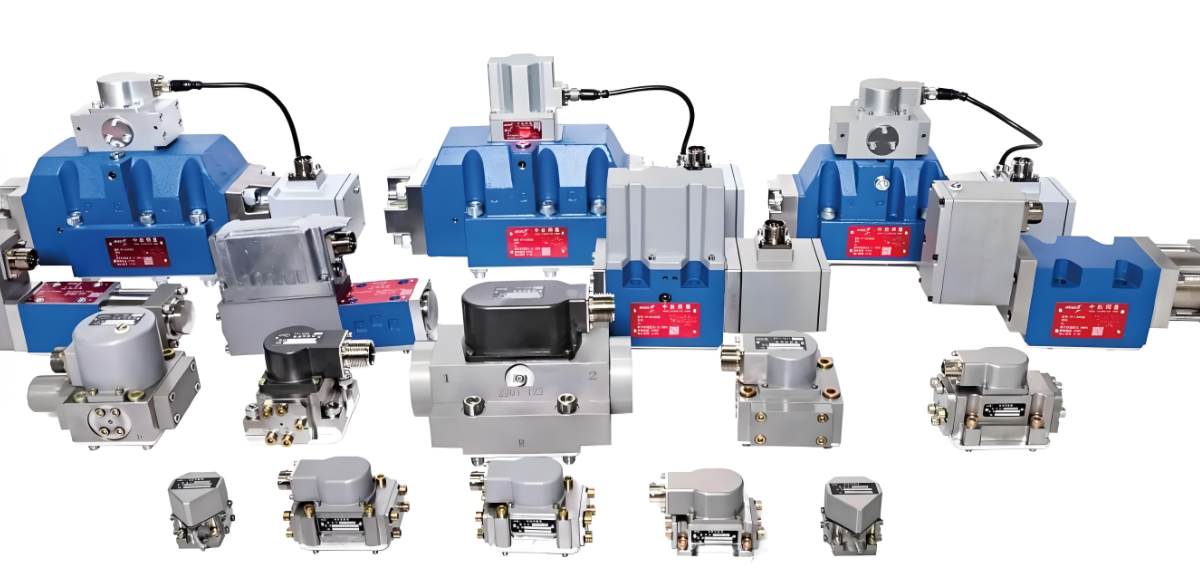
In the vast and dynamic field of fluid dynamics, few components can have such a significant impact as servo valves. Although it is often seen as a small component in large systems, servo valves are indispensable in applications that require high precision, high reliability, and high control force. Its application scope covers multiple fields such as aerospace, industrial automation, and even medical equipment, silently providing power for various systems we rely on in our daily lives.
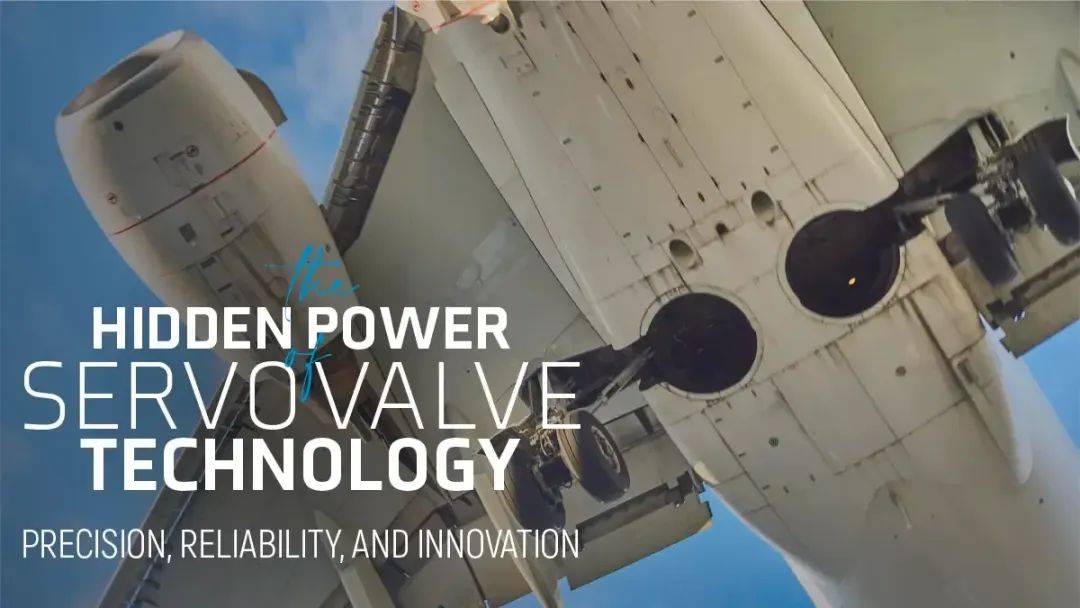
Essentially, a servo valve is an electromechanical device that can control the flow and pressure of hydraulic or pneumatic fluids based on electrical input signals. It can achieve precise control over motion, displacement, or force, making it essential in applications that require high precision, fast response, and repeatability. Servo valves typically have two main designs:
Single stage valves: typically smaller in size, but capable of achieving precise pressure control in low to medium flow applications.
Two stage valves: Control a larger main stage through a pilot stage to provide higher flow to cope with larger loads.
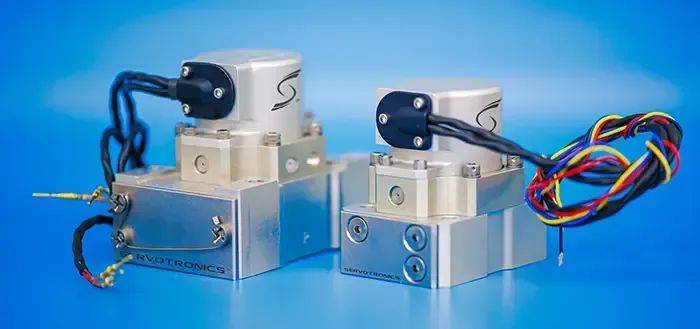
Construction of servo valve:
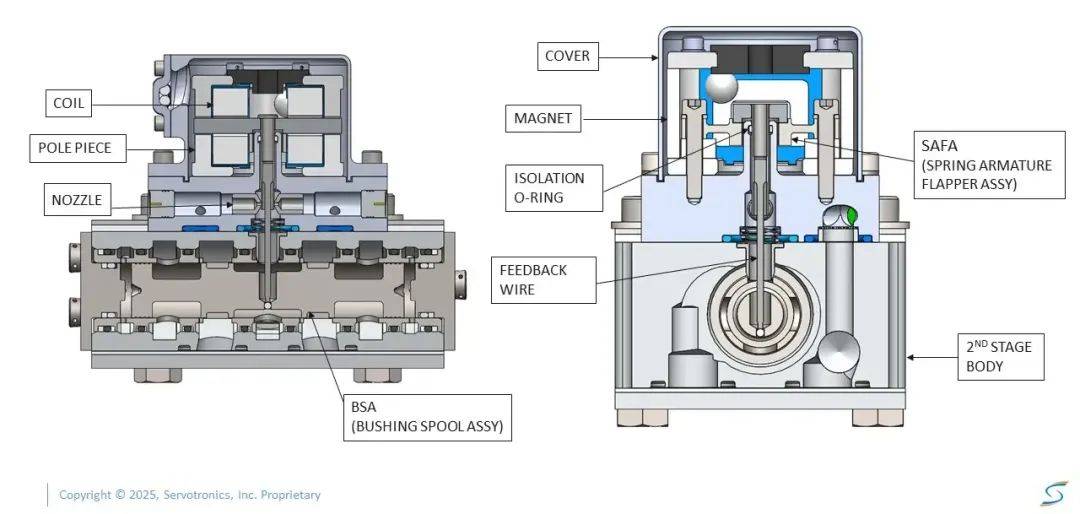
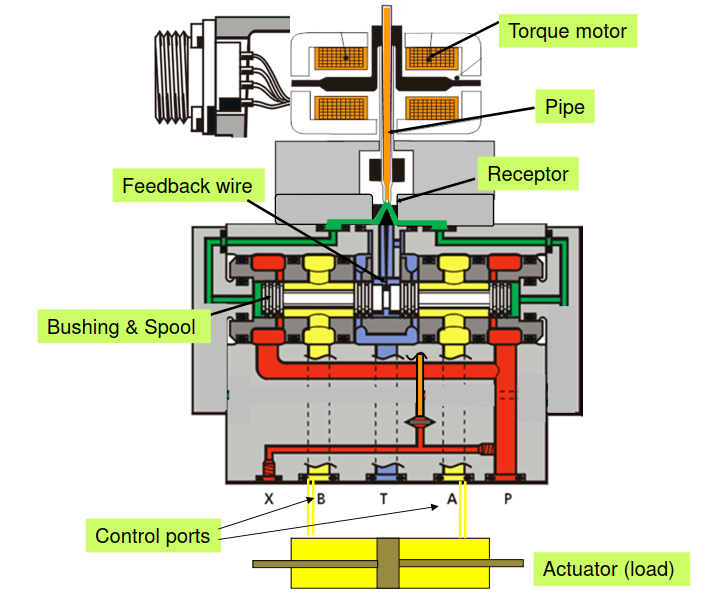
Torque motor is one of the core components of servo valve. It utilizes the combined action of permanent magnets and electromagnets to convert electrical signals into mechanical motion. Its key components include permanent magnets, pole pieces, coils, armatures, fluid seals, and torsion or flexible tube "springs".
The main function of a torque motor is to achieve precise and repeatable displacement of baffles or jets. When a torque motor is used as the pilot stage for a two-stage electro-hydraulic servo valve (EHSV), the feedback line is fixed to the baffle or jet to provide mechanical feedback from the position of the second stage spool valve. In EHSV, the torque provided by the torque motor is the most critical characteristic.
In the pressure measurement stage, the baffle nozzle or jet tube structure is the most commonly used topology for achieving precise fluid control. This level will vary depending on the specific application. In a two-stage EHSV, four-way pressure control is a typical configuration used to provide pilot pressure differential for the main stage slide valve.
In single-stage applications, the metered fluid directly interacts with hydraulic or pneumatic systems. Single stage servo valves (SSSVs) can be implemented in various forms such as bidirectional flow control, three-way pressure control, four-way pressure control, etc. Today's SSSVs have surpassed traditional small pilot valves associated with EHSVs, with stronger power and flow capabilities.
The main stage, which is the second stage of the two-stage EHSV, is a flow amplifier. The main stage will to some extent mimic the behavior of its leading stage, thereby achieving significant amplification of flow while maintaining low leakage. Four way EHSV is the most common type, which can respond quickly and accurately to large flow rates to control actuators with large piston diameters. Today's EHSVs can also include three-way, anti-skid braking structures, as well as multi port and complex flow controllers. For example, a single EHSV can control multiple bidirectional subsystems.
Each component must work together, which requires careful design and assembly to achieve optimal performance.