
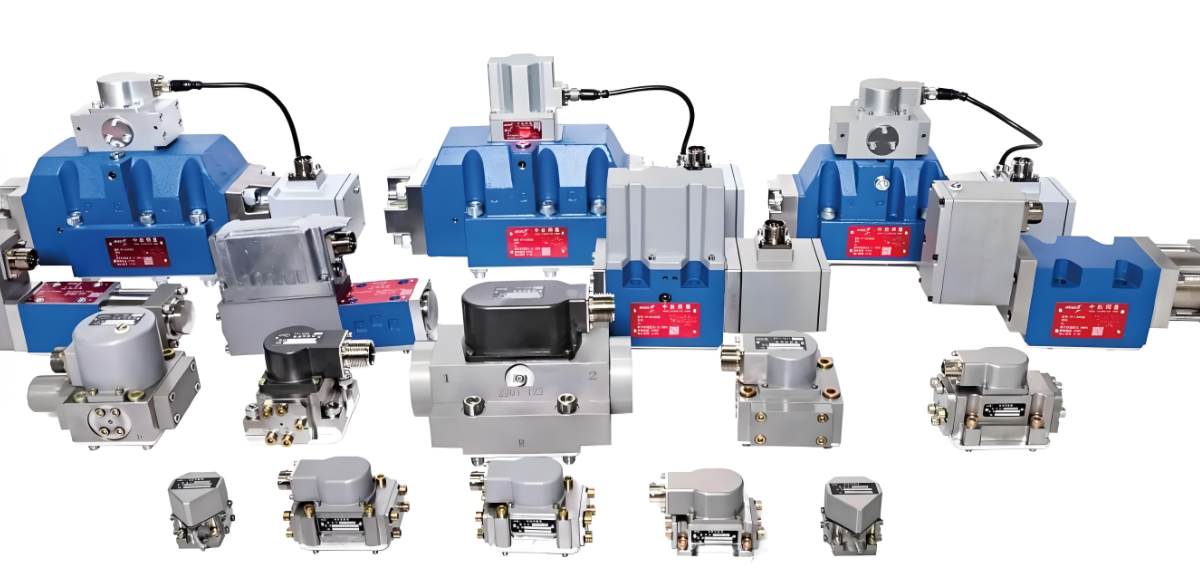
Parker servo proportional valves are an indispensable precision component in the field of fluid control, with extensive applications and complex technology. They are the key to achieving precise control of fluid power systems. This article will discuss the definition, structure, working principle, application scenarios, and technical analysis of Parker servo proportional valves.
I. Definition of Parker servo proportional valves
Parker servo proportional valves are a precision component in the field of fluid control, which is indispensable. They have a wide range of applications, complex technology, and are the key to achieving precise control of fluid power systems. This article will discuss the definition, structure, working principle, application scenarios, and technical analysis of Parker servo proportional valves.
II. Structure of Parker servo proportional valves
Parker servo proportional valves are mainly composed of servo motors, valve bodies, valve cores, and feedback mechanisms. Among them, the servo motor is responsible for providing power, the valve body and valve core control the opening and closing of the fluid and the flow rate, and the feedback mechanism is used to detect the position of the valve core, thereby feeding back to the servo motor to achieve precise control.
III. Working principle of Parker servo proportional valves
The working principle of Parker servo proportional valves is mainly based on the position control of the valve core. The servo motor drives the valve core to move through the control of the servo controller, and the position of the valve core determines the opening and closing of the fluid and the flow rate. The feedback mechanism detects the position of the valve core in real time and feeds back the information to the servo controller, which adjusts the speed or angle of the servo motor according to the feedback information, thereby achieving precise control of the fluid.
IV. Application scenarios of Parker servo proportional valves
The application range of Parker servo proportional valves is very extensive, including but not limited to robotics, industrial automation, aerospace, medical equipment, and automotive manufacturing. In these fields, Parker servo proportional valves can achieve precise control of fluids, thereby improving production efficiency, reducing production costs, and enhancing product quality.
V. Technical Analysis of Parker servo proportional valves
The technical analysis of Parker servo proportional valves mainly includes the following aspects:
High-precision control: Parker servo proportional valves use high-precision servo motors and high-precision valve cores, which can achieve high-precision control of fluids.
Fast response: Parker servo proportional valves use high-response-speed servo motors and high-response-speed valve cores, which can achieve rapid response to fluids.
Long service life: Parker servo proportional valves use wear-resistant materials and sealing design, which can achieve long service life.
Easy to maintain: Parker servo proportional valves adopt a modular design, which is easy to maintain and replace.
In summary, Parker servo proportional valves have a wide range of application prospects in the field of fluid control. With the development of technology, the technology of Parker servo proportional valves will also continue to progress, providing more precise, efficient, and reliable solutions for the field of fluid control.